Lyceum & Book Club - Week 14 - Lecture Notes - the Day Constantinople Fell
- Mar 20, 2022
- 4 min read
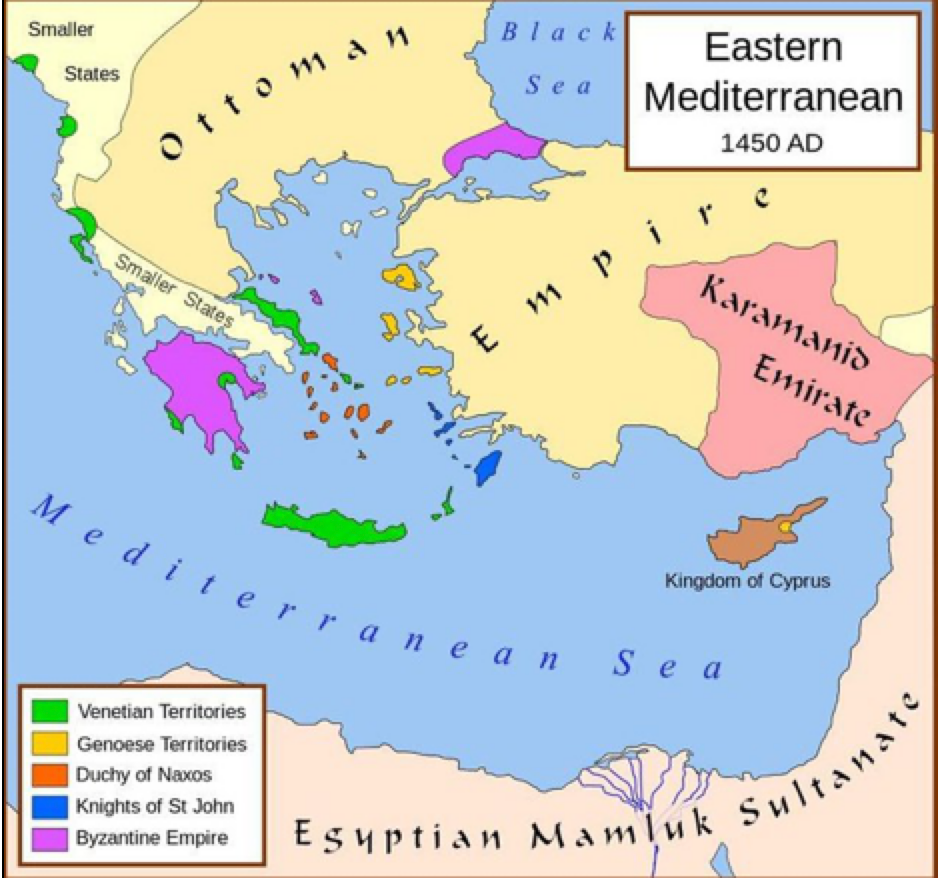
Arabs at that time felt the use of firearms was a dishonorable way to fight. But the Ottomans, who are not Arab, but Turkish, saw the advantage and became quite expert on the use of cannons in battle.
The leader of the Ottoman army was 21 year old Mehmet (later Sultan Mehmet/spelling is either Mehmed or Mehmet), who ignored all advice that Constantinople could not be conquered and besieged it anyway.
On Tue.,May 29,1453, the Ottoman Empire defeated Constantinople (Tuesdays are still considered by some Greeks as an unlucky day of the week)
Mehmed lay siege to the city of Constantinople.
Mehmed lay siege to the city of Constantinople.

The Turks aimed their cannons at the city gate and pounded Constantinople's walls during the 53 day siege.
The Fall of Constantinople - Pim D - 4:48 min

At the end of the 53 day siege, the Turks had identified a section of the wall that had already been breached as the weakest point and decided to concentrate their final attack in this one spot in wave after wave, knowing they had more troops to throw into the fight and could physically, by sheer numbers, wear out the Christians.
The first attack started at one in the morning. The Bashi-bazouks, mercenaries, were sent in first, just to soften up the opposition. It is said they fought for two hours before being called to retreat. They had made no progress, but the attack left many dead and wounded on both sides, so it did achieve it's chief aim of reducing numbers and tiring out the defenders.
The second wave was by the regular army troops out of Anatolia. This was a much more organized attack than by the irregular militia that had been sent in first. They actually broke through the breach but were pushed back through. This attack was called off at dawn.
Before the defenders had time to rest and regroup.Mehmet sent in his elite troops, the Janissaries - a highly disciplined, highly trained corps. This battle made it through to the stockades, but were being held and pushed back.
While this was still going on,Ottoman scouts came upon a gate that had been left unlocked.The Constantinople defenders would go out of this gate to try and penetrate the Turkish army flanks - and someone had left it unlocked in the confusion. Mehmet's men were able to enter unnoticed and open other gates, fire on the defenders below from the upper walls while raising their flag from the upper parapet.
Up to this point, Mehmed's ships had primarily been used to enforce a blockade upon the city. But now troops from those ships came on shore, breaching the harbour walls and joining the final battle.
Dramatization of the Fall of Constantinople to give us a feel for the battle. - 5 min
What is significant about this feat is that for the first time, it was shown that the age of thick walls manned by soldiers encased in body armour so heavy they could not move was over. This outdated form of warfare could not stand up to the fire power of cannons and mobile troops.
A new day in military strategy and city planning had arrived.
——————————————
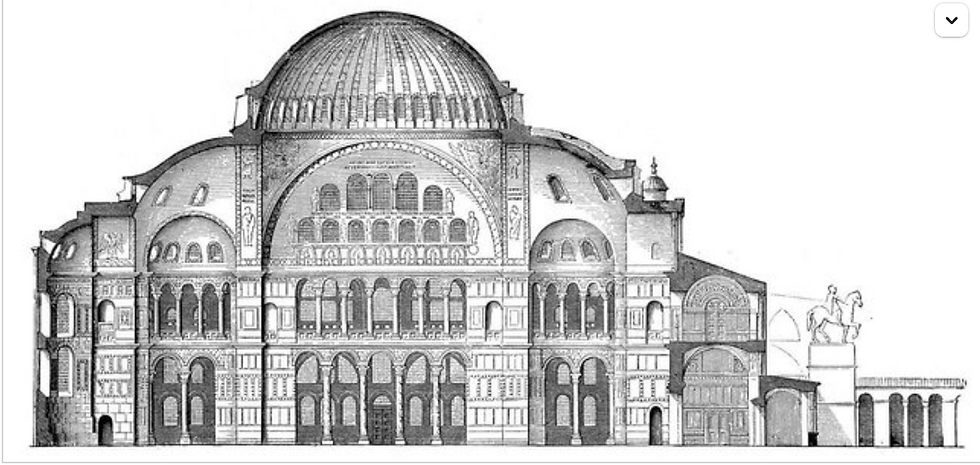
On the morning of May 29,1453, the Ottomans stormed into Constantinople and smashed through the bronze doors of Hagia Sophia and massacred or captured (to be sold in the slave markets) those who sought refugee in the church.
The Turks killed the Greek emperor, plundered Hagia Sophia of it's treasures and turned it into a mosque.
----------------------------------------------
In the aftermath of the Ottoman take over, the nonMuslim communities within Constantinople were given a high degree of autonomy to rule their own communities as they saw fit under their own laws in regard to legal matters of a "personal" nature, such as family law, marriage, property transfer, education, etc rather than by the laws of Islam (sharia law). In time these separate legal courts came to be called millets. It was less disruptive and caused less strife with an occupied people to allow them to follow their own customs regarding marriage, family, religious customs, etc - an area that is created out of deeply held traditions, is viewed as sacrosanct by the population to the point peasants will rise up in revolt over seemingly minor issues pertaining to their everyday life. Allowing this type of governance made the ruling of foreign communities go much smoother. Allowing an occupied people to exercise control over their own population rather than having to expend resources forcing change where it was unnecessary was a common practice in territories that the Ottoman conquered.
The Fall of Constantinople is considered to be the end of the Byzantine Empire, though some places, like the Morea Despotate (the island/peninsula of Peloponnese/Achaia )and the Empire of Trebizond lasted for a few more years until the Ottomans defeated those territories. It also marks the end of the Middle Ages and the beginning of a new historical period in Europe.
In 1461, the independent Byzantine state in Trebizond fell to Mehmed and that was the last breath of the once mighty Byzantine Empire.


Comments