Lyceum B - Astronomy - Week 26 - Jupiter
- May 4, 2022
- 2 min read

Past the Asteroid Belt, we come to the gas giants - Jupiter, Saturn, Uranus and Neptune. We call these gas giants because they are made up of little or no solid matter.
Jupiter is the largest and closest gas planet to the Sun. (It is the fifth planet from the Sun) 1,300 Earths could fit into Jupiter. You can view Jupiter without a telescope. From Earth it looks like a star.
If you look through a set of binoculars or through a small telescope, you can even see four of Jupiter’s moons. You may even be able to see Jupiter’s bands of clouds.
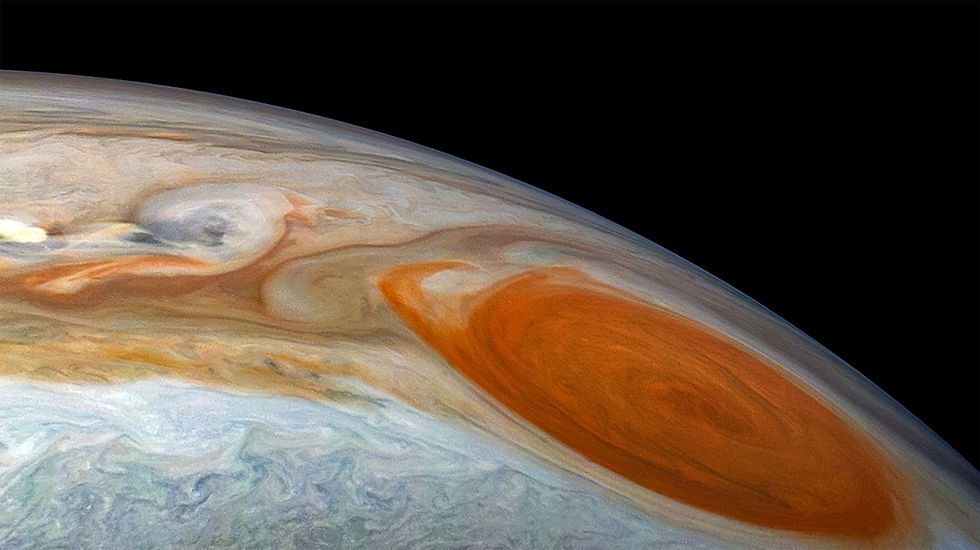
Jupiter is made of mostly hydrogen (and helium) gas on its surface and liquid hydrogen inside. It has no solid surface. There are constant turbulent winds and storms in Jupiter’s atmosphere. There is a permanent violent storm of swirling gasses in Jupiter’s atmosphere that we call the Great Red Spot, that is three times the size of Earth.

All of the gas giants are encircled by rings.


Jupiter has (at least) 10 moons. The four largest moons are each bigger than the planet Pluto.
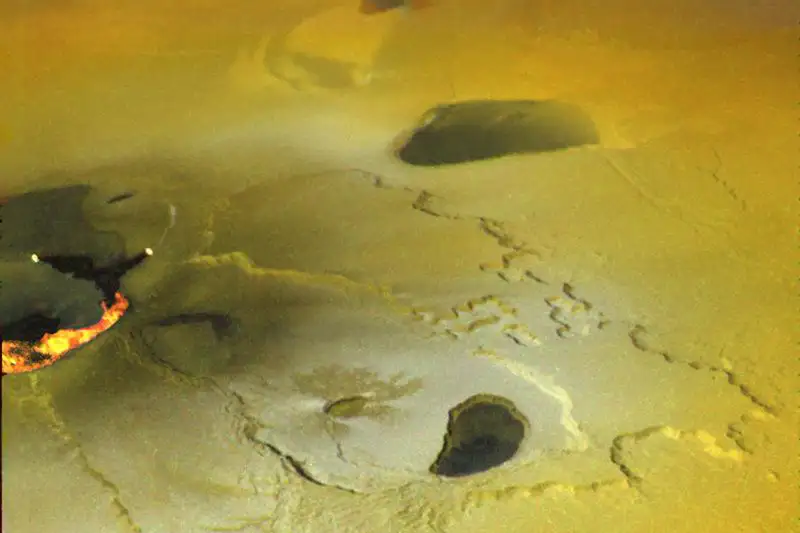
In 1979, the Voyager 1 space craft spotted a myriad of erupting volcanoes on one of Jupiter’s moons - Io. On Io, vocalness spew a type of sulfur snow.
Io Moon

Vocano Erupting on Io


Jupiter has radiation belts (caused by electrically charged particles from the Sun becoming trapped in the planet’s magnetic field) so strong that even space probes need to be protected. - How the Universe Works
Jupiter bulges around its equator. This is caused by centrifugal force with is caused by the fact that Jupiter rotates faster than any other planet in the Solar System - it completes a rotation every ten hours.
-------------------------------------
Videos
Professor Dave Explains Astronomy
The Formation of the Earth and Moon - 11:26 min
Crash Course Astronomy #16 - Jupiter - 10:43 min


Comments