Lyceum A - Physics - Week 17 - Hearing
- Apr 3, 2022
- 4 min read


Sound waves enter the outer ear which is shaped to help gather in sound waves. If you cup your hands around your ears while you are listening to music, you will find the music is louder than when you take away your hands. This is the function of the outer portion of the ear. The curved surfaces of the ear deflect sound waves to your ear. The more sound waves the ears receive, the louder the sound waves. Animals, like rabbits, have very large outer ears to capture even greater amounts of sound waves. They hear sounds that humans can not hear.
Here are some pictures of antique ear trumpets that people used to help them hear.
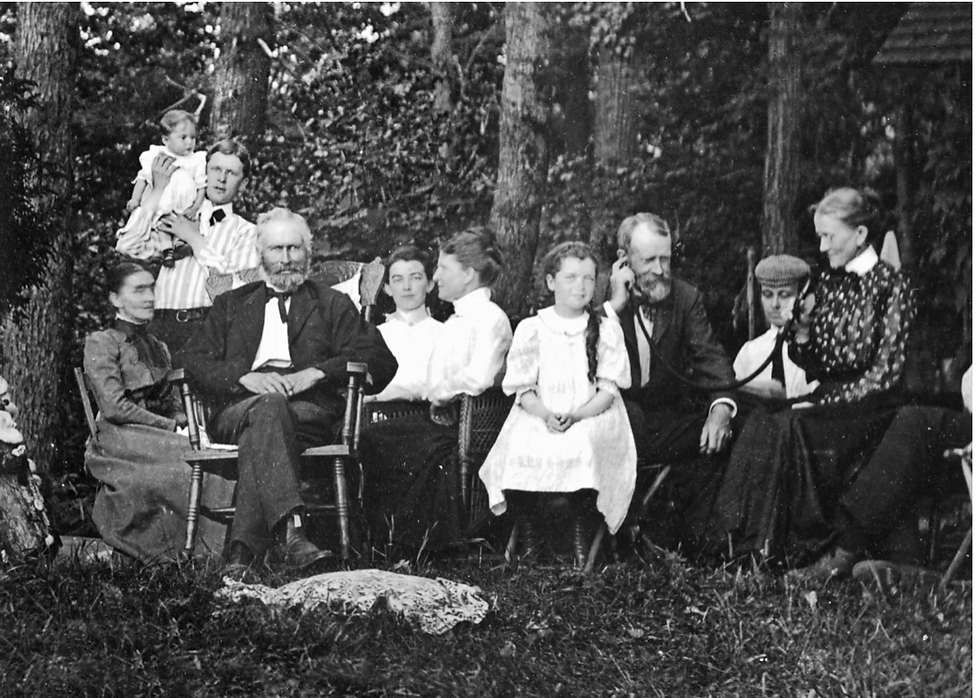


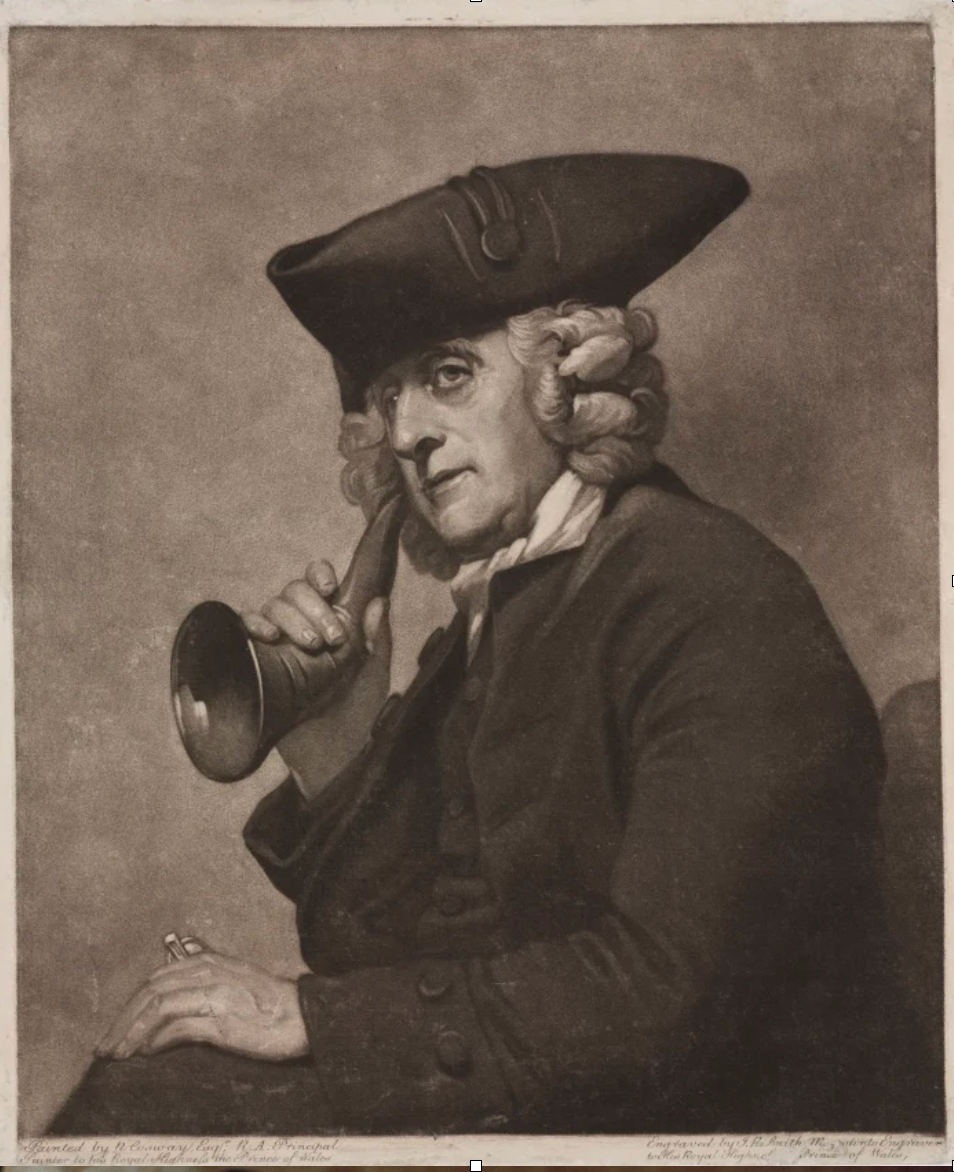
Sound waves then travel down a narrow passage called the ear canal to the ear drum. The ear drum is a thin skin that stretches across the passage to the inner ear and it starts vibrating.


The sound waves cause the ear drum to vibrate which then sends these vibrations to three tiny connected bones in the middle ear. The bones are called the hammer (malleus), the anvil (incus), and the stirrup (staples). These bones amplify the sound vibrations and cause the cochlea in the inner ear to vibrate.
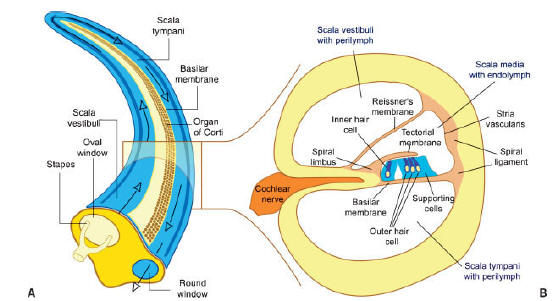
The cochlea is a structure that is curled up looking like a snail and is filled with fluid. The vibrations of the liquid in the cochlea cause tiny hairs inside the cochlea to vibrate as well. Each hair is a different length and is sensitive to a different range of vibrations. Each hair is connected to a nerve which goes to the auditory nerve, which then sends a signal to the brain.
For more detail on the process:
An elastic membrane runs the length of the cochlea separating it into a lower and upper chamber.
Running along the top of this membrane sit hair cells which detect sound. When the vibrations from the middle ear start the fluid inside the cochlea vibrating, the fluid ripples along these sensitive hair cells.
Hair cells near the wide end of the cochlea detect higher pitched sounds while those closer to the center detect lower-pitched sounds.

Hair cells - sensory cells sitting on top of the basilar membrane - ride the wave. As the hair moves up and down, microscopic hair-like projections (known as
stereocilia) that perch on top of the hair cells bump against an overlying structure and bend. Bending causes pore-like channels, which are at the tips of the stereo cilia, to open up. When that happens, chemicals rush into the cells, creating an electrical signal. - midcd.hih.gov
The auditory nerve carries this electrical signal to the brain which interprets it as sound.


From ling.fju.edu.tw:
Coiling around the inside of the cochlea, the organ of Corti contains the cells responsible for hearing, the hair cells. There are two types of hair cells: inner hair cells and outer hair cells. These cells have stereocilia or “hairs” that stick out. The bottom of these cells are attached to the basilar membrane and the stereocilia are in contact with the tectorial membrane. Inside the cochlea, sound waves cause the basilar membrane to vibrate up and down. This creates a shearing force between the basilar membrane and the tectorial membrane, causing the hair cell stereo cilia to bend back and forth. This leads to internal changes within the hair cells that creates electrical signals. Auditory nerve fibers rest below the hair cells and pass these signals on to the brain. So, the bending of the stereo cilia is how hair cells sense sounds.
Outer hair cells have a special function within the cochlea. They are shaped cylindrically, like a can, and have stereocilia at the top of the cell, and a nucleus at the bottom. When the stereocilia are bent in response to a sound wave, an electromotive response occurs. This means the cell changes in length. So, with every sound wave, the cell shortens and then elongates. This pushes against the tectoral membrane, selectively amplifying the vibration of the basilar membrane. This allows us to hear very quiet sounds.

When you are exposed to loud music or noise, it is your hair cells which are damaged. Hearing loss occurs because loud sounds are really just large pressure waves (like when you stand next to a subwoofer and can “feel” the bass). These large pressure waves bend the stereocilia too far, sometimes to the point where they are damaged. This kills the hair cell. Since cochlear hair cells can not grow back, this manifests as a permanent hearing loss.
It is important at all ages to protect the hearing from too loud of sounds that could permanently damage your hearing. Always wear protective ear gear when working around loud machines or equipment. Be careful how loud you put any device that produces sound so it does not damage the hair cells. If you can “feel” those vibrations, it’s too loud.
—————-
When a person can’t hear, they will use sign language to communicate. It is helpful if those who can hear learn some words in sigh language so they can communicate with those who can’t hear.
20+ Basic Sign Language Phrases for Beginners | ASL - TakeLessons - 13.12 min
SIGN LANGUAGE FOR BEGINNERS - 5 minute magic - 10:57 min


Comments