1st February Field Trip - to Rome, Italy to see Vatican - Monday
- Feb 7, 2022
- 5 min read
Coffee and croissants are sent to each member's room for breakfast.

Please have your check-on luggage packed and outside your door when you leave. We will not be going back to the hotel, but will go directly to the airport at 3pm.
We get an early start with a tour of the Vatican Grottoes at 6:30 am.
From https://www.st-peters-basilica-tickets.com:
Before the current Basilica existed, an older church stood in its place called Old St. Peter’s Basilica. When this older church was demolished and the construction of the new Basilica began, it was built over the Tomb of St. Peter and other Papal tombs.
Below the current St. Peter’s Basilica lies the Vatican Grottoes containing a set of Papal tombs, below which lies the ancient burial site known as the Vatican Necropolis. More than 90 Popes have been buried inside the Grottoes.
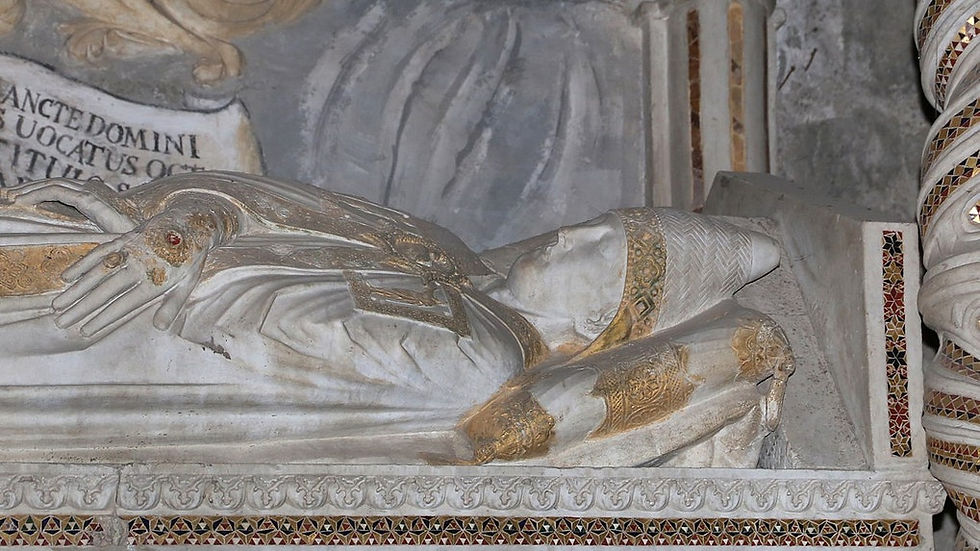


There are a number of small side chapels contained in the Vatican Grottoes, including the Chapel of the Madonna of Bocciata, The Tomb of the Stuarts and
Clementine Chapel.
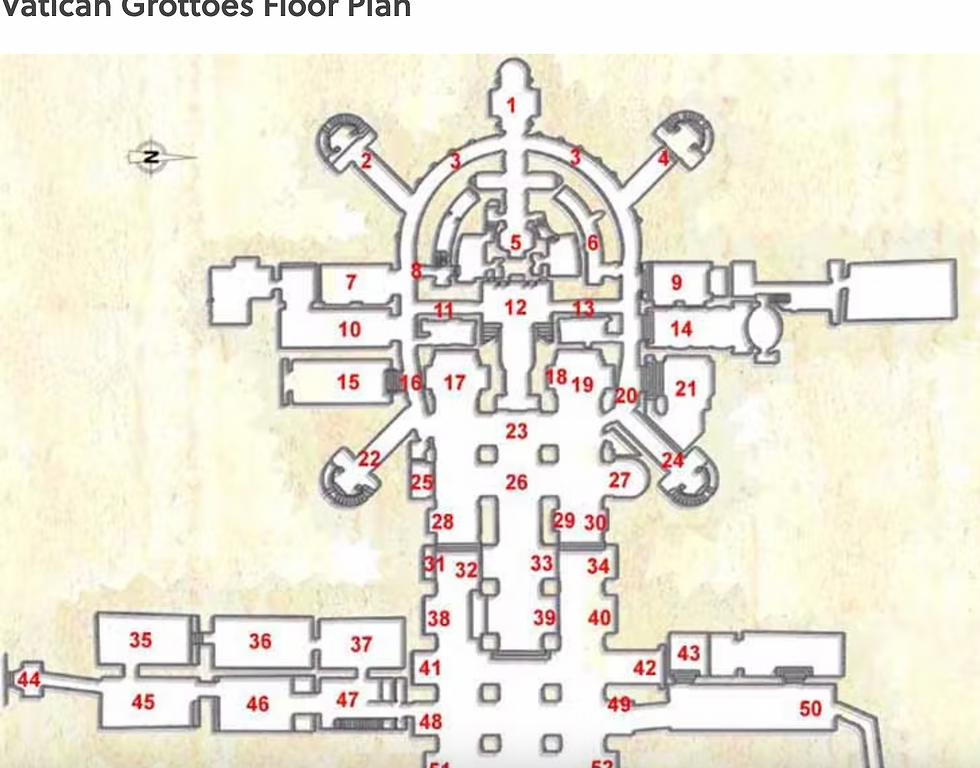
We expect to spend about an hour and a half in the Grottoes.
We will then take a tour of the Vatican Necropolis that will last approximately 2 hours.
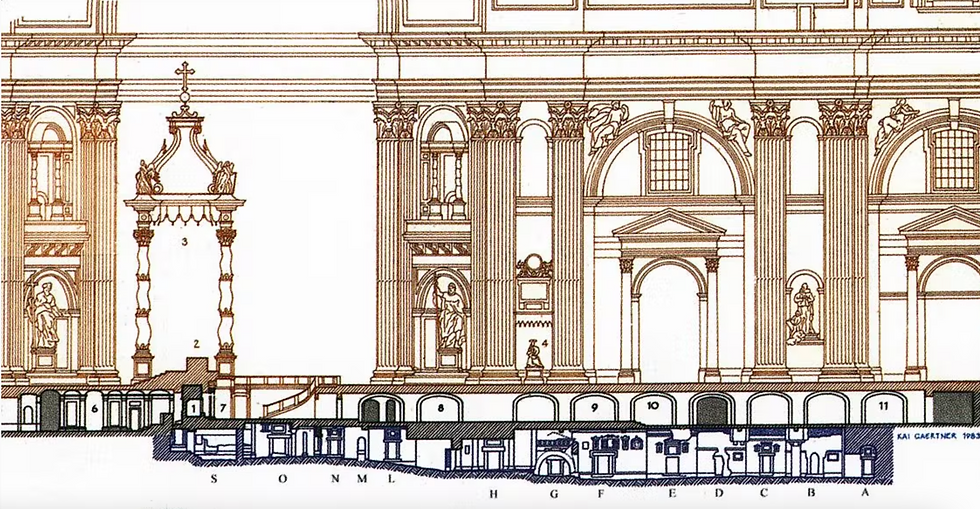
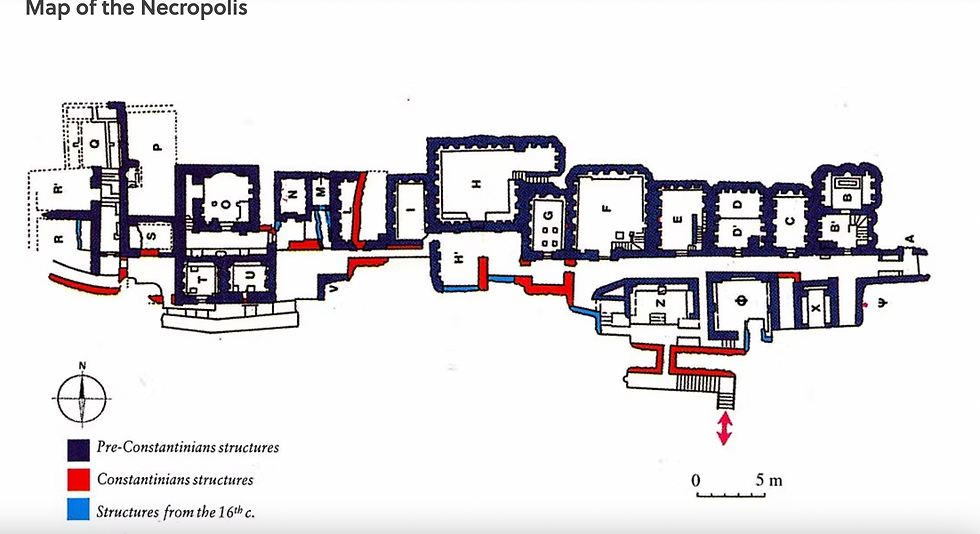
Keep in mind that the conditions at the Necropolis might not be suitable for all. The temperature and humidity are much higher underground so if you have any pre-existing health conditions, you might want to sit this one out.

The virtual tour of Vatican Necropolis takes you through all the major areas underground with just the click of a button. Navigate your way through the Necropolis with a 360° view, while on a virtual tour.
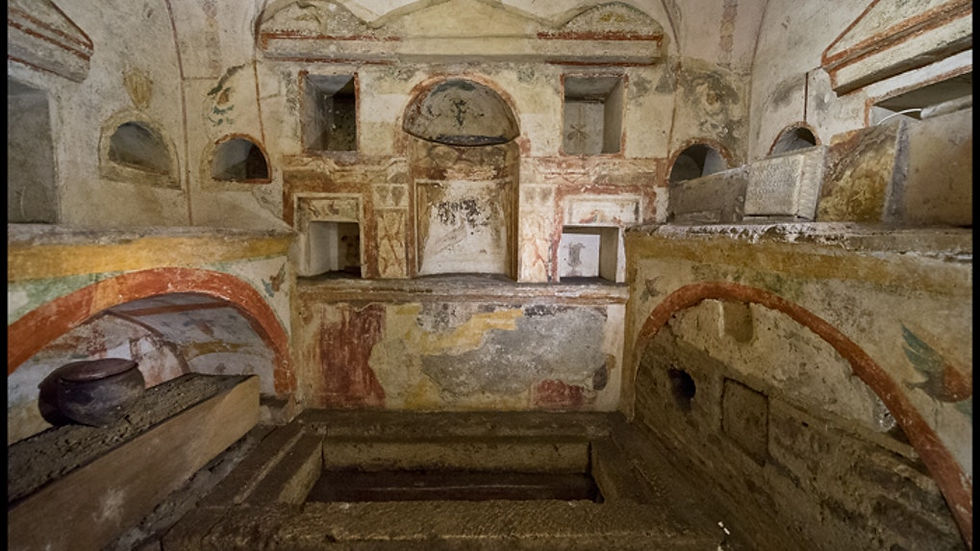
From https://www.st-peters-basilica-tickets.com:
What is Vatican Necropolis?
Papal tombs
Discover ancient Roman burial grounds hidden beneath the grounds of Vatican City.
Explore a detailed network of mausoleums and tombs from the 1st and 4th centuries.
Archaeologists believe that this site contains the original tomb of St. Peter himself!
You will also get a close look at Emperor Constantine’s Temple, 15 mausoleums, and tombs from Pagan and Christian burial grounds.
What Lies Under the Vatican City?
Beneath the Vatican City, or more accurately under St. Peter's Basilica, you will find the Vatican Necropolis. The site was discovered during the early years of the pontificate of Pius XII Pacelli (1939-1958), who undertook a series of archaeological explorations in the area of the Vatican Confession and in the center of the Sacred Caves.
Upon entering the Scavi, or Vatican Necropolis, visitors are led down three levels to a 1st century AD Pagan burial ground with a few small clay and stone repositories, followed by the 5th century Pagan and Christian combined burial ground with several medium-sized stone mausolea and other ruins, including a fractured piece of a large triumphal arch. These two levels, and the eras during which they would have been employed, roughly account for about 90% of the Roman Empire's duration. Between these levels is a small earthen mound with a hole carved out of it, which is illuminated and lightly fenced off, and which houses what are supposed to be St. Peter's bones.
The papal grotto is included within this labyrinth, as is a 12th-century early Christian church with grates in the roof that go up into the basilica's floor.
Construction of Old St. Peter
According to tradition, the Apostle Peter was crucified by Emporer Nero between 64 or 67 AD in the Circus. It is believed, thanks to the necropolis' proximity to the Circus of Nero, that St. Peter is buried here. After the Edict of Milan in the year 313, Emperor Constantine began the construction of a commemorative basilica, that has come to be known as the Old St. Peter's Basilica. The basilica was located just above the supposed grave of the Apostle Peter. Emperor Constantine I excavated part of the necropolis to create enough flat land for the foundation of the church. As a result, the necropolis was filled with soil and building debris.
Caligula’s Circus
The origins of the Vatican Necropolis are believed to date back to the time of the Etruscans buried the dead beyond the city walls. During this period, the law required bodies of the deceased to be buried outside of the urban area. This means that during its inception, this area was technically not a part of the city. They built a necropolis on a nearby bill called the Viaticum. The “city of the dead,” as its name suggests, primarily served as Pagan and Christian burial grounds, which were open-air sites.
After the Etruscan civilization fell to the Romans, the Vatican territory became part of the city of Rome. Emperor Caligula built a circus adjacent to the necropolis. The circus was used by Romans for horse races and games, as well as Christian martyrdom. A huge Egyptian obelisk was raised in the center of the circus, which stands today at St. Peter's Square.
Excavations of the Necropolis
Excavations under St. Peter’s Basilica began in the 1940s and carried on until 1949, under the sponsorship of the Vatican. This work began at the request of then Pope Pius XI, who wished to be buried near the grave of Peter the Apostle. Initially, the excavation began with the aim of locating the actual burial site of St. Peter.
After years of uncovering the remains of the site, certain areas of Emperor Constantine’s Basilica were found along with 15 mausoleums, and Pagan and Christian tombs. Many former Pope’s are also believed to be buried at the Vatican Necropolis making this site a holy one, visited by many every year.
We will also visit the Tomb of St. Peter.
In all we will spend approximately 5 hours in Vatican City today, providing members with enough time to visit areas within the walls that they have not seen previously or to revisit exhibits they want to see again.
At noon, we go to lunch at Pizzeria Emma.
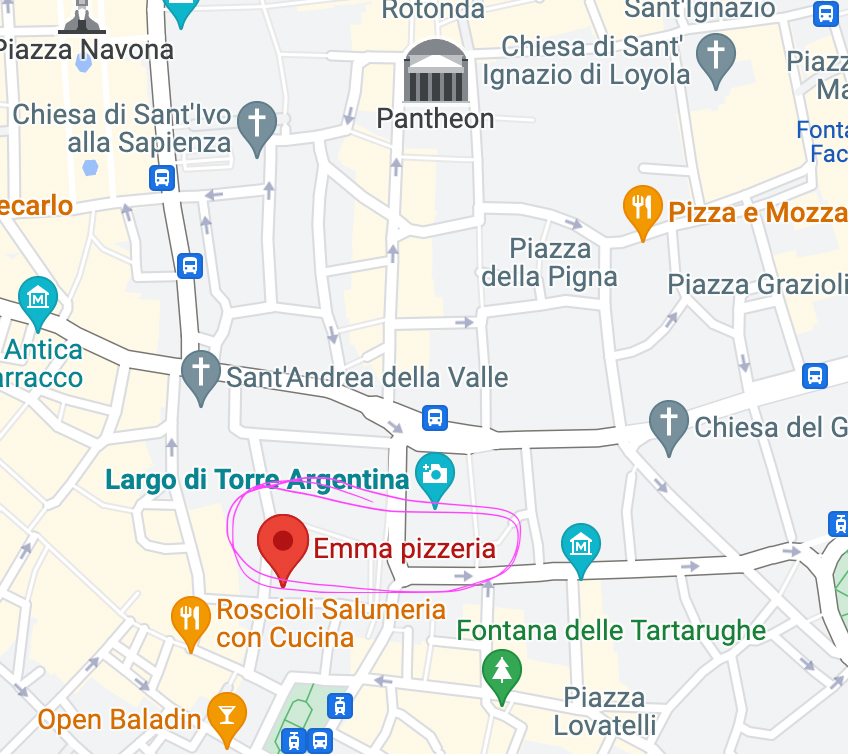

Besides whole pizzas (to be eaten with a knife and fork, we will order beer to drink with our pizza, we will order fried appetizers, such as, suppli’ or arancini, fried zucchini flowers, fried salt cod, and olive ascolane.
After lunch we head back toward our hotel, stopping for a gelato at Neve Di Latte.
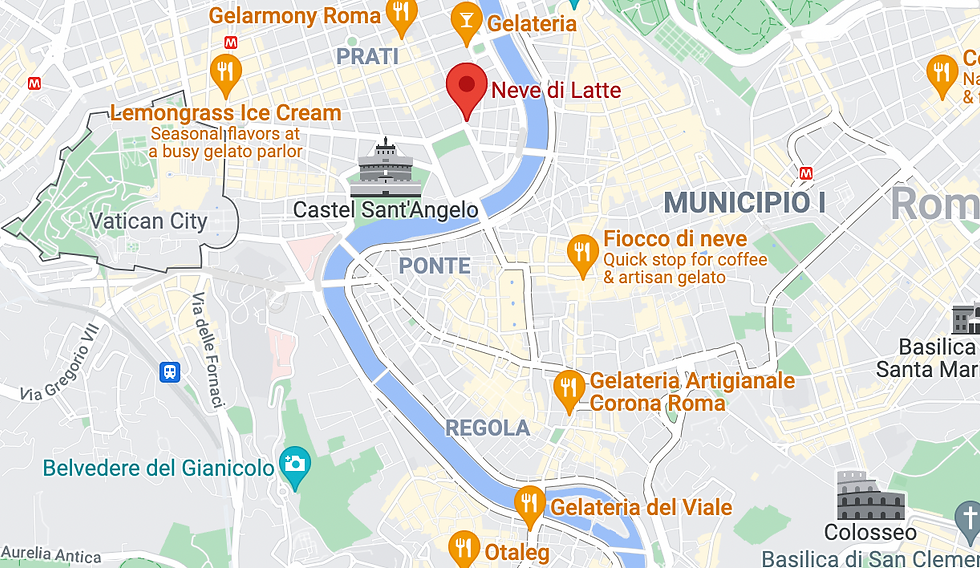
For our last hour in Rome, members have three choices - they can spend the time at the Gallery Borghese and/or the Park Borghese
Or go shopping on via Condotti or via Frattina

Or they can take this guided walk to see a few more sites.
Guided Walk

We start our walk at the Trevi Fountain.
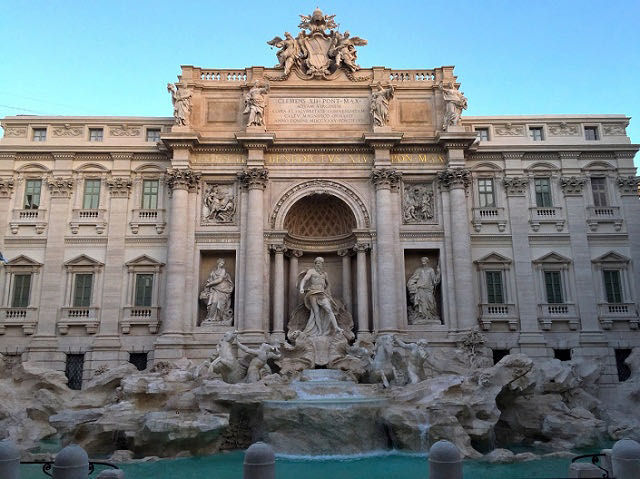
After taking photos, we walk down to Largo Argentina, which is a lovely cat sanctuary.

From there we walk through Campo dei Fiori, where there is a large outdoor market

and finally end up at Piazza Navona

where our private transport will pick us up at 3pm and take us to the airport where our flight leaves at 3:55pm. It is a 12 hour flight with a stop in New York City.
A light dinner, snacks and beverages will be served.
During the flight we will conduct our weekly Lyceum & Book Club:
This week's topic - Aristotle and Ptolemy
After our Lyceum & Book Club session, we will listen to the audio episode "Ptolemy and Ancient Astronomy" from the podcast "In Our Time" - 45 min.
To finish up tonight's program, we will watch a video on the Roman Empire:
How Rome Forged an Epic Empire - Engineering an Empire - History - 1 hr 31 min
Lights out. Try to get some sleep.
At 7:30am - Tue. morning, breakfast will be served and we will watch the final movie in the Divinci code trilogy:
Inferno - 2016 - mystery/thriller / 2 hr
Our plane lands in Atlanta at 10:05am. We will take a touring coach to Augusta and arrive in time for lunch before everyone heads their own way.


Comments